Reservoir capacity
Accumulation can reduce useful storage and complicate long-term operations, maintenance, and water management.
A coalition for working rivers
We advance practical ways to recover sediment trapped in reservoirs and return suitable material to rivers, habitat, soils, and restoration projects.

01 / The challenge
Reservoirs interrupt the movement of gravel, sand, silt, organic material, and nutrients through a watershed. Material accumulates upstream while downstream reaches can lose the sediment needed to build spawning beds, bars, banks, and floodplains.
PSAC exists to connect those two problems. We bring partners together to identify suitable sediment, select appropriate recovery methods, and place material where it can create measurable public and ecological value.
Accumulation can reduce useful storage and complicate long-term operations, maintenance, and water management.
Sediment-starved channels may lose gravel and structural complexity important to salmon and aquatic life.
Disposal-only thinking can miss opportunities for habitat, shoreline, soil, and land-restoration projects.
02 / Our mission
Pacific Sediment Action Coalition is a Washington nonprofit advancing practical solutions for recovering and beneficially reusing sediment trapped in reservoirs and waterways.
Our work aims to restore sediment and gravel to downstream ecosystems, improve salmon and aquatic habitat, extend reservoir life, and explore appropriate agricultural and land-restoration uses.
03 / From accumulation to restoration
Every site is different. The sediment, watershed, ecological objective, access, permits, and economics determine the method.
Map deposits and test physical, chemical, and biological suitability.
Select methods suited to site conditions, scale, access, and ecological risk.
Move sediment by pipeline, barge, truck, bypass, or another appropriate means.
Match material to the receiving site and measure ecological and operational outcomes.
Why action matters
The historic world-scale comparison below shows water-storage capacity expanding rapidly through reservoir construction while retained sediment continues to accumulate. The two quantities are shown together to illustrate the growing management burden, not as directly interchangeable measurements.
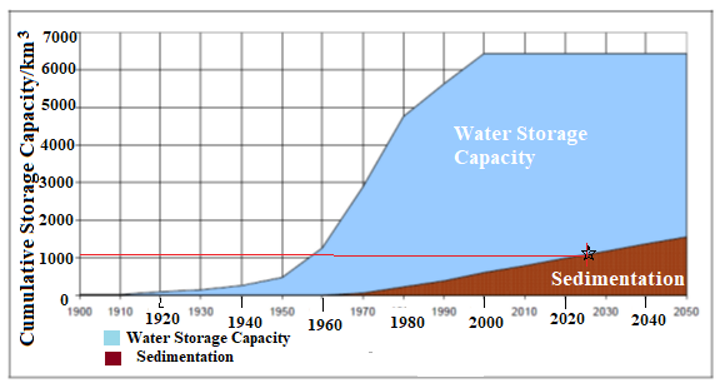
Reported figures use different units and study definitions. They should be read as examples of scale, not ranked against one another without conversion and source review.
| # | River or basin | Dam or reservoir | Reported yearly sediment retention or influx |
|---|---|---|---|
| 1 | Colorado River / San Juan River, USA | Lake Powell Dam | 26 million m³ |
| 2 | Atchafalaya River Basin / Mississippi River | — | 5.3 million metric tons |
| 3 | Santa Ana, California, USA | Prado Dam | 30,600 m³ |
| 4 | Combined Mississippi and Missouri Basin | Up to 6,000 reservoirs | 440 million metric tons total influx |
| 5 | Peace River, Canada | Dunvegan Dam | 690,000 m³ |
| 6 | Nile River, Sudan / Egypt | Lake Nasser-Nubia upstream of Aswan High Dam | 135 million metric tons per year |
National need and urgency
In an ideal system, sediment entering a reservoir would be routed around or safely moved past the dam to a downstream location, where gravel, sand, and fine material could continue replenishing the river system.
The source material accompanying this map reports that estimated U.S. water-storage capacity per person had fallen back to approximately its 1960 level as reservoirs continued to fill with sediment. The consequences are not evenly shared: when dependable storage declines and water costs rise, lower-income and water-stressed communities face greater pressure through food, utility, and infrastructure costs.
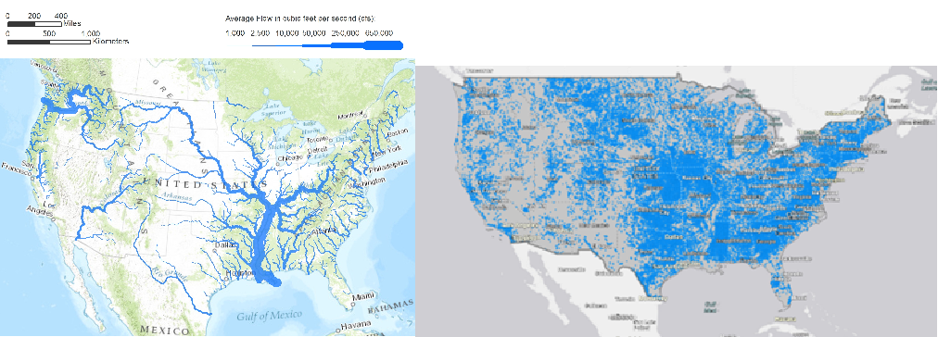
Reported total reservoir capacity, equal to approximately 40.6 km³.
Estimated storage loss from sedimentation in the 2012 Texas state water plan.
The reported annual loss could serve the washing, bathing, and landscaping demand of this many homes.
The source’s projected 2023 desalination benchmark suggests desilting below this level could be economically competitive.
These figures are historical estimates reproduced from the supplied source material, including its 2012 plan reference and projected 2023 desalination cost. They illustrate scale and a potential cost benchmark; current project decisions require updated, site-specific engineering and economic analysis.
04 / Beneficial use
Spawning gravel, channel complexity, banks, bars, and floodplains.
Strategies that protect useful storage and reduce future sediment liabilities.
Appropriate fine material considered for soil rebuilding and agricultural applications after testing.
Pilot projects that answer technical, regulatory, ecological, and economic questions.
05 / Technology spotlight
PSAC is technology-neutral. Pulsejet systems may be explored where they offer value, alongside conventional dredging, slurry transport, bypass, mechanical removal, and other approaches.
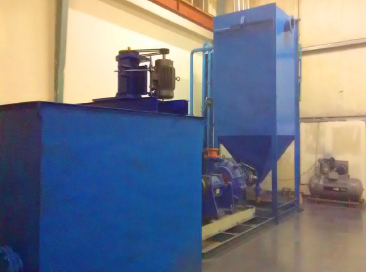
Mazdak International is developing an immersible Slurry Pulsejet Engine for reservoir sediment removal and methane capture. The company describes custom-designed, laboratory-tested units intended for depths exceeding 60 meters (200 feet).
Explore the Slurry Pulsejet Engine06 / Coalition
Build the first demonstration
We are seeking collaborators who can identify a suitable site, define the sediment and habitat need, navigate permitting, assemble funding, and measure results.